The Botched Execution of Christa Pike
by Christina Yao Pelliccioni
The Christa Pike case has led to many different twists, turns, and inconsistencies. To start with the facts, Christa Pike was sentenced to death after murdering her classmate in 1995. On September 30, she was given two doses of the lethal drug pentobarbital. After she survived, she was taken to the hospital. She regained the ability to walk and is eating. She has also regained some movement in her arms, which were burned and blistered during the execution attempt.
Pike is the only person known to survive a lethal injection. Now she has returned to death row, transported back to the facility where she has lived for the past 30 years.
Pike’s lawyers say she is dealing with an unknown amount of physical and psychological harm “including the terror, pain, and uncertainty of believing she was about to die.” A judge has demanded documentation of Pike’s psychological state before, during, and after the execution. Tennessee’s governor has halted all executions for the rest of the year. It is unclear when executions will be resumed and what this means for Pike.
Not often does a case so clearly show the flaws within the death penalty. Justice should be served, and if Christa Pike is a threat to the safety of others, she should not be allowed to walk free. But how does the continuation of attempting to end her life bring justice or peace to anyone?
One of the most confusing and inconsistent things about this case is how it’s determined how someone dies vs. being treated. Pike was sent to the hospital after she did not die and will presumably continue to receive medical care in prison. But why give her medical care if she deserves to die? Either she has humanity and is deserving of life, or she is something the state can dispose of or keep at its will.
The logic behind this could be that Pike needs to die in the “right” way, but how can the state decide what the “right” way to die is? If a quick and painless death is what is desired, Pike’s ordeal has shown this is not the way.
So what’s the humane way forward? Not having the death penalty at all. It’s a barbaric and antiquated punishment that must be discontinued.
One would hope that this incident would help those in power realize this and want to distance themselves from this horror. Unfortunately, this seems not to be the case, with the Pentagon planning to live stream an execution in December. [Editor’s note: the live-stream portion of the execution was canceled on October 15.]
This is not the way a compassionate, humane society acts. We must stand up against these dark instances. And we must make sure that these just stay instances. We cannot allow this kind of execution violence to go back to being the norm.
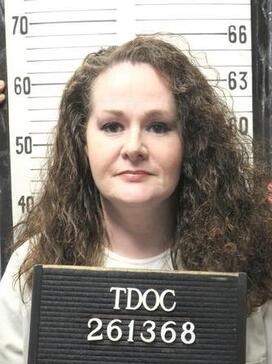
Christa Pike 2023
Editor’s Addition:
This case has some pro-life sources making connections to their abortion and euthanasia issues:
The disturbing connections between Tennessee executions and assisted dying
Cassy Cook, Live Action, October 2, 2026
The drugs used in executions are often the same as those used in assisted suicide, and as witnessed by Pike and Carruthers, these deaths are far more grisly than many realize.
Many assume that lethal injection and euthanasia merely cause someone to fall asleep and then die painlessly, but in reality, the drugs cause pulmonary edema. This means the person’s lungs fill with fluid, and he/she drowns in his/her own secretions.
But because the person is given a paralytic first, both in lethal injections and euthanasia, it is therefore impossible to know what pain or suffering the person might be experiencing.
Experiments with assisted suicide and euthanasia have also been excruciating, with one cocktail said to be “burning patients’ mouths and throats, causing some to scream in pain.”
These are not peaceful, humane deaths, whether during execution or euthanasia.
Do We Do Death for Sport?
Kathryn Jean Lopez, National Review, October 12, 2026
And I say that knowing full well that what she did at 18 was barbaric . . . After beating and knifing Slemmer to death, Pike kept a piece of her victim’s crushed skull as a souvenir to show off the next morning.
But we are not a people that lowers itself to barbarism. Unless, perhaps, there is an unborn baby involved and an abortion has been requested. Then we will crush skulls, too, and even leave babies to die if the abortion is botched. And yet we don’t treat murderers this way — we have witnesses to the planned execution, and when Tennessee failed, ambulances arrived at the prison, and Pike was given lifesaving treatment. I suppose we do that because it’s harder to look away from a full-grown adult — although when it comes to assisted suicide, we are willing to overlook that, too.
Looking at the Pike experience, the solution should not be firing squads — a more efficient way of doing the killing. The response should be to err on the side of life. Including long before a crime has ever been committed.
Pike was found to be bipolar, among her other mental-health diagnoses. She was raped throughout her childhood, first by her grandmother’s boyfriend. Her first attempted suicide was when she was twelve. Pike was failed by adults in her life over and over again . . .
Referendums for November 3, 2026: Voting Against Violence
by Rachel MacNair
Since 2020, we’ve been running a project website that tracks U.S. state and local referendums dealing with socially-approved killing of human beings (abortion, the death penalty, euthanasia, war), or related structural violence that leads to killing (poverty and discriminatory practices).
Peace and Life Referendums

Abortion is frequently a ballot topic, especially since the Dobbs decision overturning Roe. The death penalty and euthanasia do make occasional appearances, but not much. War is something that looms large in policy but not in state and local referendums — yet there have been some, especially dealing with war memorials, gun policy that isn’t mere regulation but gets into war relationships, and treating police work as if it were military. Racism will include matters of immigration policy, many symbolic actions that impact how people think, and finally abolishing all slavery by removing the exception for prisons. Quite a few different approaches to alleviating poverty pop up. More details are explained in the Topic Pages.
 means we think a yes vote would be best for diminishing violence
 means we think a no vote is needed since the referendum encourages socially-approved violence
Abortion:
Idaho – a successful petition drive put a pro-abortion statute on the ballot to overturn the state’s abortion ban.
Missouri – the state legislature put on an amendment to the state constitution to overturn the pro-abortion amendment passed in 2024. Nevada – they already voted overwhelmingly in 2024 for a pro-abortion constitutional amendment in a state where no abortion bans were ever contemplated. The rules state they have to vote on it twice before it goes into effect.
War:
Arizona – turning policework into the war mindset, the measure seeks to define drug trafficking as terrorism and therefore use war tactics to counter it. Massachusetts – a petition drive put a veto referendum about firearm regulations passed by the legislature on the ballot. We focus only on those that relate to preventing mass shootings, as a form of war.Poverty:
Oklahoma – a successful petition drive for a rise in the minimum wage should have put this on the ballot in 2024, but government officials’ shenanigans delayed it until now.Abortion, Poverty, Racism, War:
Colorado – one of the very few that connects several of our issues, a successful petition drive wants to overturn state legislation stopping federal overreach and instead have local authorities turn any undocumented immigrants (or those that can’t prove otherwise right away) accused of a violent crime over to ICE. This bypasses the court system that knows how to adjudicate these properly, in favor of an agency that doesn’t even try to.Scandals with Mirror Images
by Rachel MacNair
A video clip I saw recently offers a point I’ve thought of for a long time. Since it’s Chuck Todd making the point, and he’s a news analyst of long stature, the point has more heft than me just thinking it alone. He says it’s a theory he’s not 100% certain of, but he finds it persuasive. You can find the clip from Holy Post Media: The Scandal That Changed Evangelical Politics Forever.
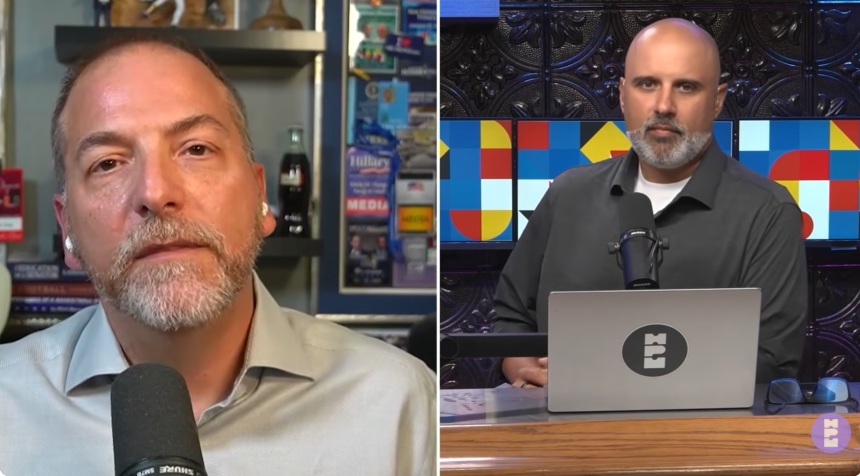
The scandal was the one that got Bill Clinton impeached, though not removed from office. Todd says it may help explain why evangelicals later embraced Trump. At the time, evangelicals as a whole were keen on the idea that character mattered.
Some feminists at the time, says Todd, were inclined to speak out against Clinton but didn’t do so because they wanted a seat at the table. (Except for us pro-life feminists, of course, but we weren’t getting any such seat.) My recollection entails much more than that: they thought having Clinton was crucial to keeping abortion readily available, and went to great lengths to support him accordingly. And said so, over and over.
But Clinton stayed in office. Todd thinks this made some evangelical leaders more transactional, as opposed to insisting that character mattered. If people looked the other way with Bill Clinton, maybe people will look the other way with Trump, if he can get them what they want. That was the rationale – flip the switch. Todd explicitly cites the overturning of Roe v. Wade as one of the transactions hoped for.
But Did the Clinton Transaction Work?
Suppose the feminists of the Clinton era had followed their own principles about how young women employees should be treated by the powerful and that they were more concerned about having only people of character being in positions of power. Had Clinton not had the support and been removed from office, what would have happened? While much is difficult to predict, this much we know: Vice President Al Gore would have become President.
Gore was one of those Democrats who had been pro-life early on, but had changed by this time. They would have still had their advocate in office.
We can’t predict for certain but can easily guess that, since he would have been the incumbent, and since in reality he came excruciatingly close to winning the next election without being the incumbent, he could well have won instead of Bush in 2020.
The trajectory of history would be entirely different. And the chances are good that Republicans would have remained as skittish about actually doing anything pro-life on abortion as they were then and have been ever since. The pro-abortion position could possibly be stronger now under this alternative scenario.
We don’t know the future from here on out, but we’re living in the future from that time. People who thought they were being pragmatic and realistic for their own position may well not have been in the long run.
Will the Trump Transaction Work Now?
We did get Roe v. Wade overturned. But the context was not helpful to persuasion. Pro-abortion states have doubled down. The technology of chemical abortions is making the actual numbers of abortions go up after they had been declining for years. I collected together a bunch of conservative commentators expounding:
Trump Sabotaging the Pro-Life Movement
There are in this country millions of people who think Trump is despicable but who admire Pope Leo XIV. A transactional approach that includes corruption is going to alienate a lot of people. Many will appreciate people who stand on principle even if they disagree with the principle itself. That makes them more likely to listen.
I’m still delighted that Roe v. Wade was overturned, of course. But I also knew at the time that it was just a step. The headline I put into our e-newsletter, Peace & Life Connections, was “Major Obstacle Removed.” And it’s a huge relief to have that obstacle removed.
The obstacle of transactional politicians who mainly give lip service to pro-life principles, who don’t take action even just on abortion, much less other life issues, and who taint it all with their own intense corruption and cruel policies – they’re another major obstacle that we have yet to remove.
Removing them at the ballot box would be ideal, but short of that and in the meantime, we need to show cruelty and hypocrisy and violating principles for the intense damage they are. They damage both directly and by hurting the social movements who don’t merely give lip service but really mean it.
Playing political games is something both camps can do. Which one is up and which one is down will vary across time. Only standing on principle remains constant.
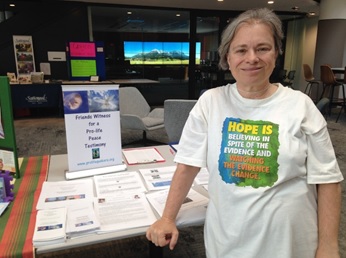
Rachel MacNair standing on principle at a Quaker gathering.
====================================================================
Because consistent-life candidates are few and mainly for lower offices, our electoral work focuses on referendums, where how to vote is more clear-cut. See our project website:
Peace and Life Referendums: Voting against Violence
One Catholic Case Against Nuclear Deterrence
compiled by Fr. Jim Hewes
By the end of 1945, the blast, heat, and radiation of the nuclear attacks on Hiroshima and Nagasaki had killed an estimated 74,000 human beings made in the image of God in Nagasaki and 140,000 human beings made in the image of God in Hiroshima. Most were civilians. Many of those who survived the nuclear attacks would die from radiation-induced illnesses in the years to come. Many historians and other ethical authors now largely agree that the US did not need to drop the bombs to avoid an invasion of Japan and bring an end to World War II.
Today, 9 countries still possess more than 13,000 nuclear weapons. The risk of nuclear war is still with us. To reduce this danger, we must freeze and reverse the arms race and, ultimately, eliminate nuclear weapons. We too easily think that nuclear deterrence works when, in fact, the only entity that benefits is the military-industrial complex with its defense contractors.

Deterrence theory is based upon the concept of the use of threats by one party to convince another party to refrain from initiating some course of action. In 1966, the Second Vatican Council concluded: “Any act of war aimed indiscriminately at the destruction of entire cities or of extensive areas along with their populations is a crime against God and man itself. It merits unequivocal and unhesitating condemnation.” In a pastoral letter in 1983, the US Catholic bishops added: “This condemnation, in our judgment, applies even to the retaliatory use of weapons striking enemy cities after our own have already been struck.” They continued that, “if something is immoral to do, then it is also immoral to threaten.”
Even if one holds to a Just War Theory, if there ever were to be a just war, all the conditions for the just war would have to be completely and strictly upheld. One of the conditions of Just War Theory is that the lives of innocent civilians are never to be taken directly, regardless of the reason for doing so. If one targeted non-combatants for any reason, the war would be unjust. A nuclear war would be only indiscriminate destruction, with the overwhelming killing of mainly civilians.
As Fr. Charlie McCarthy states (and verified in a personal communication to me):
Since Christian Just War Theory cannot be found in Jesus’ teachings, the question is, why didn’t Jesus include a just war theory or even a justified violence teaching as part of His Way? Did He not know about war and violence and their various justifications? Did He just forget for three years to add that to His teaching? There is no appearance of the Just War Theory in all of the New Testament. In fact, this theory does not appear in Christianity until over 300 years after Christ. Christians in that early era of the church, who were closest to Christ, did not participate in war because they saw it as incompatible with Christ’s life and His teaching.
The Just War Theory is not a dogma of the Church. St. Augustine (after St. Ambrose) in developing the Just War tradition, never said there could be a just war. Rather, he stated if Christians were ever to participate in a war, these standards would have to be strictly and completely followed. The strong moral presumption was always against war and in favor of peace. It is quite the opposite of what our sad history has shown.
In the “Gospel of Life” Pope John Paul II states: “Life, especially human life, belongs only to God: for this reason, whoever attacks human life in some way attacks God Himself.” If done by launching a nuclear weapon, this would be on a catastrophic scale. Pope John Paul II stated that any war is a failure of humanity. In the case of a nuclear war, the final failure for humanity.
Pope Benedict XVI (2009 World Day of Peace Message, no. 13) stated, “In a nuclear war there would be no victors, only victims. The truth of peace requires that all — whether those governments which openly or secretly possess nuclear arms, or those planning to acquire them— agree to change their course by clear and firm decisions and strive for a progressive and concerted nuclear disarmament. The resources which would be saved could then be employed in projects of development capable of benefiting all their people, especially the poor.”
Pope Francis declared on January 1, 2017 (Fiftieth World Day of Peace) that to be true followers of Jesus includes “making active non-violence our way of life… May charity and non-violence govern how we treat each other as individuals, within society and in the international life… may non-violence be the hallmark of our decisions, our relationships, and our actions and indeed of the political life in all its forms.”
In December 2017, Pope Francis firmly condemned the possession of nuclear weapons for the first time at a Vatican conference on disarmament. The Pope went on to say that if we also take into account the risk of accidental detonation because of error of any kind, and the heightened danger from the threat of their use, their very possession is to be firmly condemned. Pope Francis also noted both the humanitarian consequences of nuclear weapons use and the “false sense of security” created by nuclear weapons as reasons for condemning possession, as well as the high cost of maintaining a nuclear arsenal.
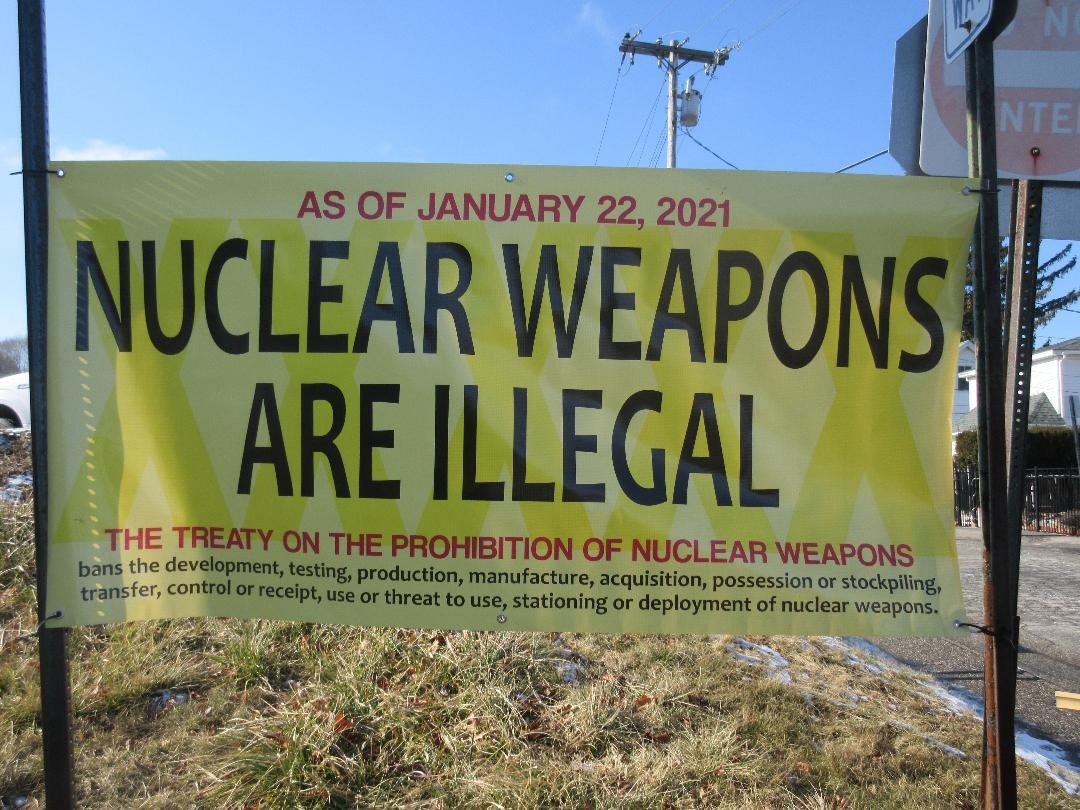
The International Campaign to Abolish Nuclear Weapons (ICAN) is a broad, inclusive campaign, focused on mobilizing civil society around the world to support the specific objective of prohibiting and eliminating nuclear weapons. To join in the work to end nuclear weapons, go to: https://www.icanw.org/
It took 50 years for an estimated 2.5 billion pre-born children to be killed by abortions world-wide. If there was a nuclear war, there could be 7.8 billion people dead (or wish they were dead) in a day or two. As Martin Luther King, Jr. stated: “The choice is no longer between violence and non-violence, but between nonviolence or nonexistence.”
So, please continue to pray for not only a reduction of nuclear weapons but ultimately that all of them be abolished from the face of the earth. Especially in Russia and the U.S., which together hold 90% of the nuclear weapons in the world.
=============================
For some more of our many posts from Jim Hewes, see:
Reaching the Chaplain that Blessed the Bomb
A Personal Reflection on a Just War
Exposing Injustice Through Graphic Images
Death Penalty and other Killing: The Destructive Effect on Us
Reflections from My Decades of Consistent Life Experience
Consistent Life History: Being Across the Board
Reaching the Chaplain that Blessed the Bomb
by Jim Hewes
Fr. Charlie McCarthy [Emanuel Charles McCarthy] once told me about a conference he was to give to the priests of the Diocese of Detroit. The Cardinal sent a letter asking all of his 800 priests to come to Charlie’s presentation. When he got there, only 8 had come. Yet Charlie gave his talks on nonviolence as if there were 800 in attendance.
At each of his talks, one particular priest gave Charlie a hard time, arguing that some violence was justified. Charlie was patient and gentle but also clearly and strongly answered each of his questions.
A few weeks after the conference, Charlie got a surprise call from this very same priest. He wanted Charlie to give those presentations on nonviolence in his own parish. Charlie was taken back by the request, but agreed to come to this priest’s parish. When he gave the presentations, this priest still kept commenting and asking many tough questions of Charlie, but he was not as confrontative as the last time.
A year later Charlie was coming to another parish in Detroit. This same priest heard about it and asked if they could have lunch together. Charlie said that he wouldn’t have the time but why doesn’t he come to lunch at this other parish, where Charlie was presenting; so the priest did come.
During lunch they discussed the bombing of Hiroshima and Nagasaki. Someone would make a comment about this and this same priest would intervene and comment that the statement that the other person made was not true. A different person made another comment about Hiroshima and Nagasaki, and the priest would intervene again and comment that the statement that this other person made was also not true.
This went on for a while. Finally one person got so upset that he confronted the priest by asking him: “why are you so sure of this? Were you there?”
The priest answered him: “Yes, I was there. I was the Catholic Chaplain that blessed the Christian men who dropped the atom bombs.”
There was silence in the room.
His name was Father George Zabelka. He spent the rest of his life going across the United States and talking on nonviolence. His story can be found at the website: www.centerforchristiannonviolence.org.
There is a meaning for me is his story. Even though it’s so natural to look for numbers in our programs, God has a different purpose. Charlie could have cancelled because there were only 8 people, but that didn’t faze him. As it turned out, one of those eight was Fr. George Zabelka. That was not only an incredible grace of conversion for him, but a tremendous means of grace though his witness to so many people, people that Fr. George touched by his speaking out across the country.
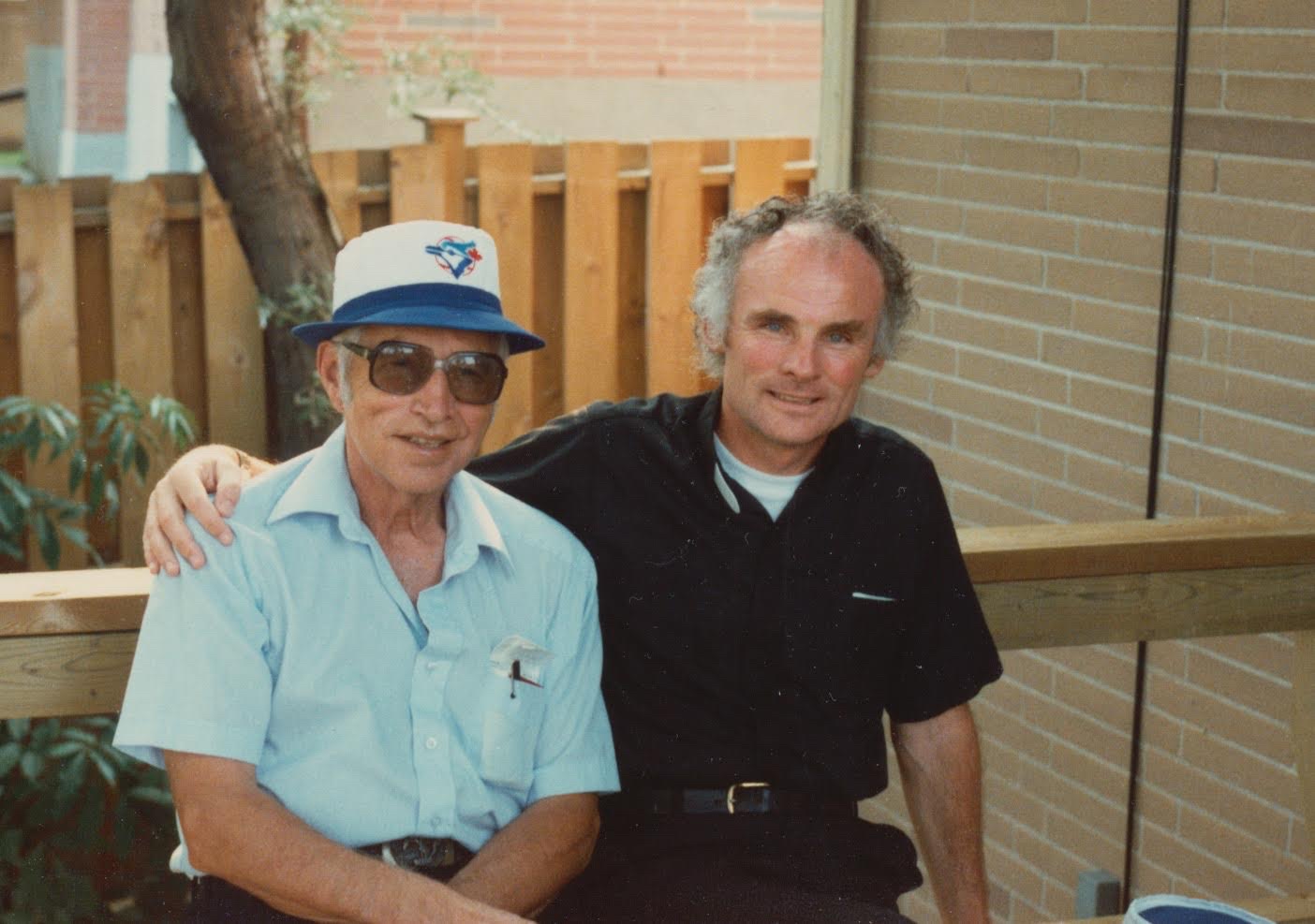
Father George Zabelka, left, with Father Emmanuel Charles McCarthy in Toronto, Aug. 9, 1985 Credit: Photo courtesy of Emmanuel Charles McCarthy, in America: The Jesuit Review
More on Fr. McCarthy
Fr. Charlie McCarthy I consider a friend. Rev. Emmanuel Charles McCarthy is a priest of the Eastern Rite (Byzantine) of the Catholic Church. He was formerly a lawyer, university educator and founder and original director of The Program for the Study and Practice of Nonviolent Conflict Resolution at the University of Notre Dame. He is also a co-founder of Pax Christi-USA.
For over forty years he has directed educational programs and conducted spiritual retreats throughout the world on the issue of the relationship of faith and violence. He is author of three books: All Things Flee Thee for Thou Fleest Me!: A Cry to the Churches and Their Leaders to Stop Running from the Nonviolent Jesus and His Nonviolent Way, August 9, and Christian Just War Theory: The Logic of Deceit. He has also authored numerous essays and articles on the subject of violence and religion.
His audio/video series on Gospel Nonviolence, Behold the Lamb, is internationally recognized as the most spiritually penetrating and logically ordered presentation on this dimension of the person and teaching of Jesus available in this format. Emmanuel Charles McCarthy was nominated for the Nobel Peace Prize for his life’s work on behalf of peace within people and among people.
These quotes come from Abortion and War, October 4, 2011, though the full article is no longer up – but there is a video version:
As I read the triumphant headlines in the newspapers day after day—‘U.S. Pounds Iraq from Air’—and saw the pictures of missiles streaking into Iraq, I could not help but hear the silent screams of all the little Iraqi children in utero who were having their lives ripped from them. The lucky ones were the ones who took a direct hit. The ones, who were aborted because of percussion, vibration or because of the terror, trauma, malnourishment and/or exhaustion visited upon their mothers by war, would probably have suffered less agonizing deaths at the wrong end of a suction machine in an abortion clinic . . .
In the very first news program I saw on TV after the start of the 1991 war between the U.S. and Iraq, an American pilot was being interviewed. He said he experienced no interference in dropping his bombs and that when he left Baghdad, “It was lit up like a Christmas tree!” . . . To analogize a Baghdad of a thousand horror-filled infernos to a “lit Christmas tree” is a grotesque misrepresentation of the event that is taking place. However, it is an accurate representation of a human mind and heart drugged into a moral stupor by the war propaganda of erotic nationalism. . . . Is it not the flagrant misnaming of reality that is the foundation for all pro-abortion philosophies and politics? Is it not the obstinate refusal to call murder by its correct name, murder, that is at the heart of the pro-choice position? Is not the misnaming of murder as just another “medical operation” the hook on which all pro-choice propaganda hangs?”
=========================
For more of our posts relating to the bombings of Hiroshima and Nagasaki, here are two recent ones:
Orphans of Hiroshima
by Sarah Terzo
On August 6, 1945, the United States military dropped an atomic bomb on Hiroshima, Japan. This one of a series on Hiroshima orphans. The rest of the series can be found on my Substack.
The stories in this article are from Dr. Arata Osada’s Children of Hiroshima, which was published in Japan in 1951 and later translated into English. Osada interviewed children affected by the bombing.
You can find this book in e-book format on Barnes & Noble and Amazon under the title Children of the A-Bomb: Testament of the Boys and Girls of Hiroshima.
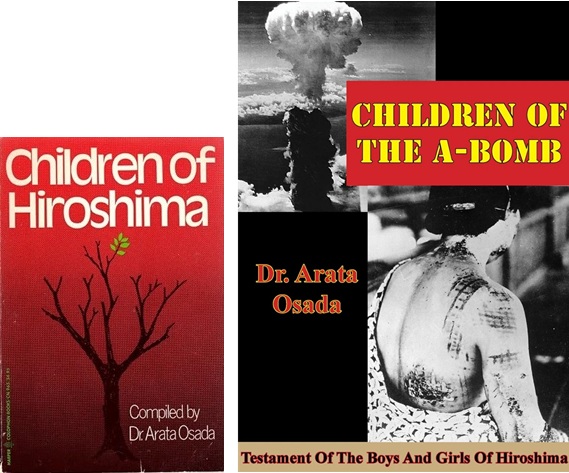
Toshihiko’s Story
Toshihiko Tanabe was in second grade (seven or eight years old) when the bomb was dropped. His parents had sent him to stay with his grandmother in the countryside to protect him from Allied bombs.
A few days after the bombing, he and his grandmother went looking for his parents. Their house was empty, and they couldn’t find them. Toshihiko said:
Were my father and mother dead? I felt very sad just thinking that. My father was so good and strong. I thought he wouldn’t be killed by a bomb like that, not Dad. And I kept telling myself that my mother was alive, too.[i]
Six days later:
[A] soldier, dirty and bloody, leaning on a stick, hardly able to walk, lurched in the door. It was no other than my dear, unforgettable father. I was so happy! I rushed to him and hugged him. I was right, my father was strong and wonderful.[ii]
Sadly, his joy was short-lived. His father was sick with radiation poisoning and passed away ten days after the bombing while Toshihiko “just clung to him tightly and cried and cried.”[iii]
He never saw his mother again and doesn’t know where she was when she died. She was one of the many missing; her body never found, presumably obliterated by the explosion.
Takako’s Story
Takako Okimoto was also in second grade. She lost her entire family. She told Osaka, “[P]arents, brothers, and sisters, relatives, and friends. All of them died, one after another.”[iv]
Her big brother, like Toshihiko’s mother, was never found. Her other brother was horribly burned and died a day after the bombing. After he died, she, her parents, and her two sisters went to the countryside, but they were unable to find medical care in the small village. Her mother went back to Hiroshima to be treated for her injuries.
A day later, her uncle sent them a message saying his mother was much worse. Takako and her surviving family members hurried to the city. Takako said, “There was a nasty smell everywhere in the city, and the scene was most horrible.”[v]
Another Hiroshima orphan, Yuriko Sakurai, whose story I shared in a previous article, described the scene when she spoke about going to Hiroshima two days after the bombing: “Bloated bodies were floating in its seven once beautiful rivers. The air … was thick with the stench of burned bodies.”[vi]
Takako arrived too late. Her mother had already died. She said, “I cried and cried. We cremated her body on the dry riverbed. People were cremating corpses here and there.”[vii]
Soon after returning to the countryside, Takako’s older sister died from radiation poisoning, and her father and little sister got very sick.
Even though Takako was only seven or eight, she tried to take care of them as best she could. She said, “Though I was too young to know what to do, I did everything I could to help my father and little sister.”[viii]
But Takako’s little sister died a day after her big sister’s funeral. Her father went to the first sister’s funeral but was too weak and sick to attend the second’s.
Despite losing four of his children and suffering from the horrible effects of radiation poisoning, Takako’s father kept up a positive attitude with her:
Father must have felt very sad and lonely to see his sons and daughters die before him, one after another, but whenever I said, ‘How do you feel this morning?’ he would said, ‘I feel a little better this morning, my dear.’ He didn’t want me to worry, but he was just getting weaker and weaker.[ix]
Her father wanted to live:
[H]e often said, “I hope I don’t die. Now that our house and possessions have been lost in the fire, I want to stay here in the country and do farming, dressed in rags but leading a quiet life with you.”…
On the morning of September 10, he departed this life, with the thought of leaving me alone weighing on his mind.[x]
Despite losing her entire family to the Americans, Takako wasn’t hateful or consumed with thoughts of revenge. Instead, she only wanted peace. She said, “I think that if we are to build a peaceful country, we should be more thoughtful toward each other.”[xi]
Junya’s Story
Junya Kojima was five when the atomic bomb was dropped. He’d lost his mother as an infant. He was staying in the countryside with relatives.
Junya’s father survived the bombing, but, like Takako’s sisters and father, was exposed to a lethal dose of radiation. Takako said, “When he came to the country, he had a lot of colored spots all over, and he soon died.”[xii]
Radiation poisoning affects the blood, reducing platelets and white blood cells and damaging red blood cells. The victim dies from massive internal bleeding.[xiii] Often, the first sign of this bleeding is petechiae. They are the “colored spots” Junya described.
Petechiae look like small red marks on the skin, caused by blood leaking from blood vessels. The spots then spread and grow larger until the bleeding becomes uncontrollable and affects internal organs.
At this point in his interview with Osada, Junya seemed to struggle for words. He didn’t know how to express the grief he felt over losing his father and becoming an orphan. He said he couldn’t find words. At the time of the interview, he was still a child, in sixth grade, eleven or twelve years old.
He finally said:
Why did I have to be so unlucky?…[B]efore [the atom bomb] I was happy. My bad luck started after the bomb. But I know that I’m a lot luckier than some kids in Hiroshima. At least I’ve got a place to live.[xiv]
Indeed, many children in Hiroshima lived in orphanages, and some were on the street.
At the time of the interview, Junya lived with his uncle. His grandmother took care of him for four years after he lost his father, but she died in 1948.
Junya said:
It’s really lonely and sad to live alone without either a father or mother or any brothers or sisters…I wish I could see my father and mother again! But I know it is impossible.[xv]
Because his mother died only two months after he was born, he had no memory of her.

Death from Radiation Poisoning
Takako and Junya watched their family members die. Their deaths weren’t easy ones.
Dr. Michihiko Hachiya, a Hiroshima survivor who treated patients with radiation sickness after the bombing, described some of the symptoms in his memoir.
He and his fellow doctors knew nothing about radiation sickness and didn’t understand why their patients were dying. The symptoms confused them, and they didn’t know how to treat them.
Hachiya wrote:
So many patients died without our understanding the cause of death that we were all in despair… [Common symptoms] were general malaise, anorexia [loss of appetite], eructation, diarrhea, and vomiting…The critically ill patients had all five…
Among those who died many had a bloody diarrhea similar to that seen in dysentery, and others had bloody urine or sputum. Severe uterine hemorrhage… was common among the women.
Some, who lingered as long as a week, died with stomatitis [ulcers in the mouth] or gangrenous tonsillitis… [S]tomatitis appeared and with it petechiae…
[The symptoms] bore no relationship to the type or severity of injury… [T]hose who appeared to be uninjured and even felt well enough to help in the care of other patients were beginning to show these blood spots beneath the skin…
There was no making heads or tails to this puzzle. But what were we to do?[xvi]
Death by radiation poisoning is painful, prolonged, and traumatic both to experience and to witness.
Even today, there’s no effective treatment for exposure to large doses of radiation such as released by an atomic bomb.[xvii] In a nuclear war, millions of people would die this way.
[i] Arata Osada, PhD, translated by Yoichi Fukushima, Children of Hiroshima (London: Taylor & French Ltd., 1980) 111.
[ii] Ibid.
[iii] Ibid., 112.
[iv] Ibid., 106.
[v] Ibid.
[vi] Ibid., 40.
[vii] Ibid., 106.
[viii] Ibid.
[ix] Ibid., 107.
[x] Ibid.
[xi] Ibid.
[xii] Ibid., 37
[xiii] Michihiko Hachiya, MD, trans. by Warner Wells, MD, Hiroshima Diary: The Journal of a Japanese Physician, August 6–September 30, 1945, (Chapel Hill, North Carolina: University of North Carolina Press, 1955) 150, 151,
[xiv] Arata Osada, Children of Hiroshima, 37.
[xv] Ibid., 37-38.
[xvi] Michihiko Hachiya, MD, Hiroshima Diary, 142-143.
[xvii] “Radiation Sickness,” Mayo Clinic, accessed August 7, 2026, https://www.mayoclinic.org/diseases-conditions/radiation-sickness/diagnosis-treatment/drc-20377061.
==========================
This is the second post this year in observance of the anniversaries of the 1945 bombings of Hiroshima and Nagasaki. Last’ week’s was:
Advocating for Peace and Recognition: The Overlooked Korean Victims of the Atomic
Posts from previous years include:
“Oh, the Hateful A-Bomb!”: Survivors’ Stories from Hiroshima and Nagasaki
“Everybody Else in the World Was Dead”: Hiroshima’s Legacy
The Danger That Faces Us All: Hiroshima and Nagasaki after 75 Years
Rejecting Mass Murder: Looking Back on Hiroshima and Nagasaki
Advocating for Peace and Recognition: The Overlooked Korean Victims of the Atomic Bombings
by John Whitehead
The United States’ atomic bombings of Hiroshima and Nagasaki are among the most infamous acts of violence in history. The bombings of Japan have been a subject of remembrance, analysis, and debate for over 80 years.
Nevertheless, even such well-known events have aspects that many people remain unaware of. One aspect of the atomic bombings that tends to be neglected is the death and injury of Koreans.
Along with the Japanese dead and survivors, many Koreans were harmed by the bombings. Further, in the decades since the bombings, Korean survivors and their descendants have suffered from an array of hardships, not least ignorance of their stories.
The 81st anniversary of the atomic bombings is a good time to remember the Korean victims of the atomic bombings and the ongoing advocacy for peace that has arisen from their experiences.
Second-Class Citizens before and after the Bombings
Japan annexed Korea in 1910. Over the next 35 years of Japanese colonial rule, many Koreans moved to Japan. Some emigrated voluntarily for economic reasons, while others were conscripted as forced labor. In Japan, Koreans were second-class citizens, often given the most difficult or dangerous work.
Lee Jung-soon was an elementary school student in Hiroshima when the bomb was dropped on August 6. She recalled that “My father was about to leave for work, but he suddenly came running back and told us to evacuate immediately…They say the streets were filled with the dead – but I was so shocked all I remember is crying. I just cried and cried.” Lee remembered that in the bombing’s aftermath the bodies of the dead “melted away so only their eyes were visible.”
Another survivor, Choi Il Chul, described his memories of August 6:
I was a twelve-year-old 6th grader of a primary school. At that moment, I was at home, located 1.3 km from the epicenter. Fortunately, as I was inside the house . . . I did not suffer the effects of strong heat rays. Though my house instantly collapsed by the blast, I was saved under the space of a piece of leaning furniture and did not suffer severe injuries.
When the black rain fell, I was inside a building in the suburbs where I took shelter, and I seemed to have escaped the effect of radioactivity contained in the rain. In my family, my older sister’s husband was missing. My immediate older brother was caught by the bomb very close to the blast center and was found in an aid station. Three days after he was taken to the place of refuge, he died.
Jeong Tae-Hong, a teenager in Nagasaki, was playing outside with his brother when the city was bombed on August 9. He remembered seeing the American plane that dropped the bomb and then an intense light, followed by a blast that knocked him to the ground. Jeong’s home was damaged, and his parents suffered severe burns on their faces and hands. Lacking medical treatment, they put mud on their wounds. When Jeong fled Nagasaki with his family, he remembered seeing dead bodies and the city in flames.
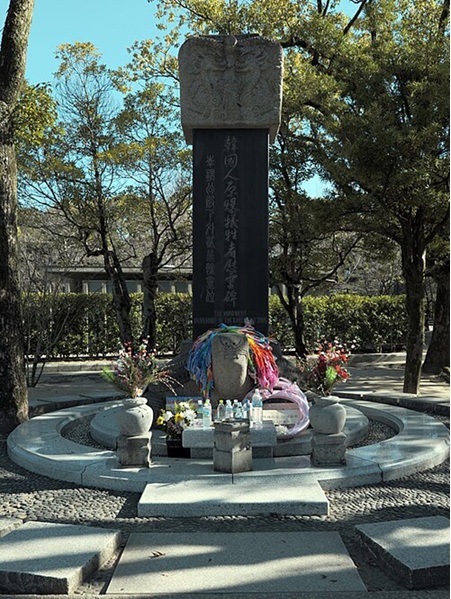
Memorial in Hiroshima to Koreans affected by atomic bomb
Like the overall number of atomic bombing victims, how many Koreans died in the bombings is disputed. The Korea Atomic Bomb Casualty Association, a survivors’ group, estimates 50,000 Koreans were killed in the Hiroshima and Nagasaki bombings combined.
Whatever the precise number of deaths, Koreans may well have been overrepresented among atomic bombing victims because of their position within Japanese society. While Japanese survivors of the bombings could flee the cities to stay with relatives, Koreans lacked such social networks. They often had to stay in the bombed cities and endure prolonged radiation exposure, with limited access to healthcare.
The Gyeonggi Welfare Foundation, a South Korean group, reported that some Korean survivors were forced to clean up the bombings’ aftermath, recovering bodies and clearing rubble. Hiroshima survivor Shim Jin-tae recalls, “Korean workers had to clean up the dead…At first they used stretchers, but there were too many bodies. Eventually, they used dustpans to gather corpses and burned them in schoolyards.”
Because of such poor treatment, the Korea Atomic Bomb Casualty Association estimates a higher death rate among Koreans affected by the bombings: roughly 57% for Koreans, compared to the overall death rate of roughly 34%.
A Legacy of Illness and Stigma
After Japan’s defeat, Korea regained its independence. Many Korean bombing survivors returned to their country. Their ordeal continued, though.
Some who initially survived the bombings died not long after. Choi Il Chul’s parents, who were not present in Hiroshima during the bombing, died shortly after returning to Korea. Choi attributes their deaths to radiation exposure they experienced in Hiroshima when they were searching for relatives in the bombing’s aftermath. Jeong Tae-Hong lost a brother in 1948 and his father and mother a few years after that. He remembered that his mother’s hair fell out and she suffered insomnia and body pain.
Other survivors suffered long-term health problems. Jeong had ailments including high blood pressure and bronchial trouble. Lee Jung-soon has had skin cancer, Parkinson’s disease, and angina.
Health challenges have persisted among survivors’ descendants. Lee’s son, Ho-chang, has experienced kidney failure and is on dialysis. “I believe it’s due to radiation exposure, but who can prove it?” he says. “It’s hard to verify scientifically – you’d need genetic testing, which is exhausting and expensive.” Han Jeong-sun, a second-generation survivor, has difficulty walking because of avascular necrosis in her hips.
A 2005 study showed that second-generation Korean survivors were far more likely than the general population to suffer depression, heart disease, and anemia. A 2013 study found second-generation survivors’ disability registration rate was nearly double the national average.
Beyond health issues, Korean survivors and their descendants have struggled with social stigma and neglect. Lee recalls that “People who were badly burned or extremely poor were treated terribly . . . In our village, some people had their backs and faces so badly scarred that only their eyes were visible. They were rejected from marriage and shunned.”
Han remembers how her in-laws reacted when her first son was born with cerebral palsy. “They said, ‘You gave birth to a crippled child and you’re crippled too—are you here to ruin our family?’”
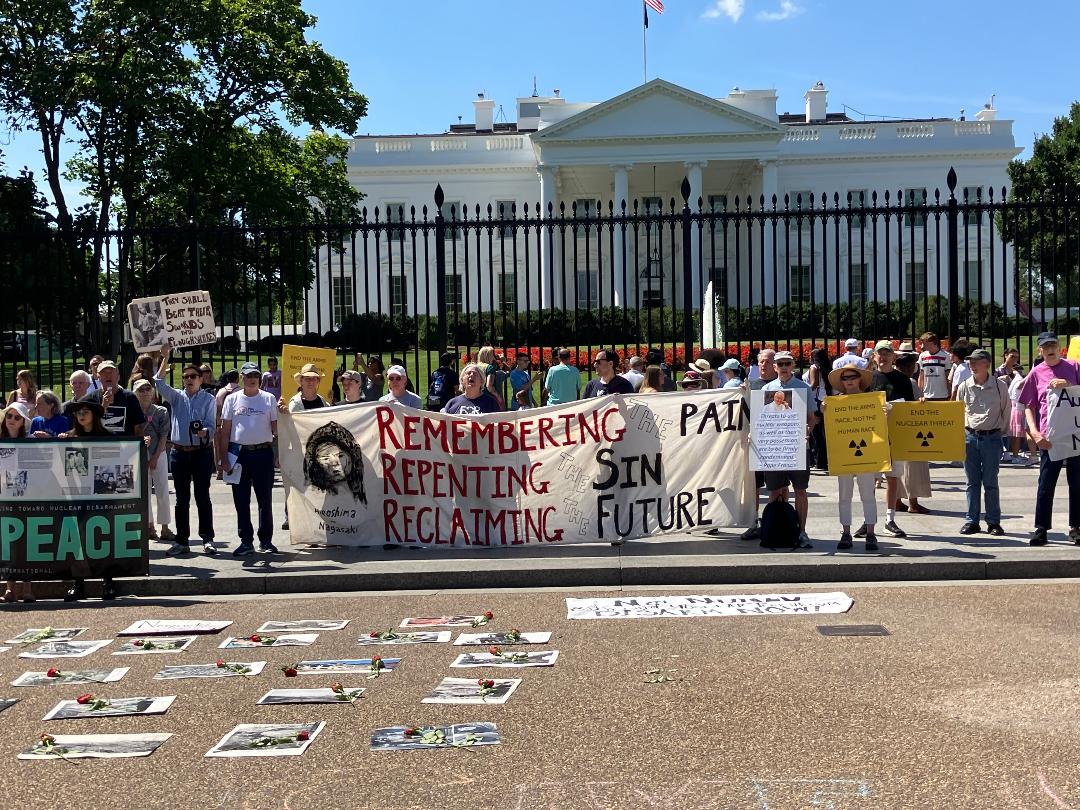
Advocating for Peace
Today, roughly 1,500 Korean atomic bombing survivors remain. They continue to campaign for recognition and compensation and also to speak out against the ongoing nuclear threat. This November, a survivors’ group will hold a tribunal “to establish the illegality of the U.S. atomic bombings in 1945 to secure the basis for condemning all nuclear threats and use as illegal today.”
Earlier in 2026, Shim Jin-tae spoke at the conference of states belonging to the Nuclear Nonproliferation Treaty. Shim declared,
Only when the United States—the nation that actually dropped the bombs—offers an apology and provides compensation will no other nation dare to even contemplate the use of nuclear weapons. All nations possessing nuclear arms must immediately dismantle their barbaric policies that threaten other countries and all of humanity with nuclear destruction.
We—the Korean survivors of the atomic bombings and our descendants—will continue to fight to the very end, until these nuclear weapons—which are, in essence, illegal instruments of war—are reduced to nothing more than scrap metal.
===================
For more of our coverage on Hiroshima and Nagasaki anniversaries, see:
“Oh, the Hateful A-Bomb!”: Survivors’ Stories from Hiroshima and Nagasaki
“Everybody Else in the World Was Dead”: Hiroshima’s Legacy
The Danger That Faces Us All: Hiroshima and Nagasaki after 75 Years
Rejecting Mass Murder: Looking Back on Hiroshima and Nagasaki
 
Abortion Bans and Women’s Welfare: Are the Laws Really to Blame?

Jacqueline Abernathy
Jacqueline Harvey Abernathy, Ph.D.
When Roe v. Wade was overturned four years ago, abortion advocates insisted that protecting unborn children from intentional death would assuredly cause the deaths and other suffering of women. Since the Dobbs decision, there seems to be no tragic circumstance that isn’t blamed on abortion bans. This makes it difficult to discern what may be actual flaws in these policies, rather than human error — or worse, medical malpractice and gross negligence.
Political Props?
The situation raises the question of whether the victims of unnecessary delays or denial of care during a miscarriage are being exploited as political props on purpose by abortion proponents. Proponents who would have them suffer needlessly simply to make a point — especially if it happens to be an anti-abortion advocate who does the suffering.
Kat Cammack
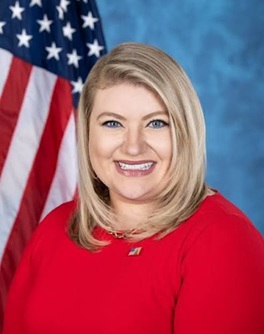
Case in point: I have seen an entire host of libelous media reports (see this example) regarding pro-life Representative Kat Cammack, who had to fight hospital staff regarding Florida law for hours before being treated for her ectopic pregnancy. Representative Cammack debated with medical personnel for two hours over the simple standard of care when an embryo implants and grows in a dangerous place outside the uterus.
When I first saw a headline suggesting the representative was a hypocrite for being anti-abortion and yet having an abortion herself (which, again, is a libel only corrected if the reader investigates past the headline), it makes me wonder. How many cases are opportunistic ploys to create suffering to expose issues within an abortion law that don’t truly exist? As opposed to actual gaps and flaws in the policies or practitioners that do deserve our attention.
The Premise is Wrong
The premise of arguments that insist women will die unless children are completely disposable is simply wrong. Pregnancy is a unique condition where two humans naturally co-exist. This can come at the expense of the mother. There certainly are trade-offs and difficult cases. I maintain a woman has the right to protect herself if the child she’s carrying presents an immediate or irreversible threat to her health.

This is why early delivery should always be an option, even if it’s too early for the child to survive. It’s not necessary to kill a child prior to delivery. The reason for doing this is that killing the baby is the goal, not just ending a pregnancy when a fetal or maternal health concern mandates it.
Delivering a child before viability because their mother’s health and safety is threatened isn’t unethical simply because the child is too young to survive. It only becomes so when the intent is killing that child.
Considering two humans with their own respective interconnected health needs, when those needs come into conflict, it’s an ethical conundrum. The stakes are typically not equal because the baby will die until they gestate to a certain point. It’s rare that a mother has a comparable risk until after that point where she could deliver the child prematurely.
The provisions of abortion bans that protect viable human life from deliberate destruction aren’t the problem. Said destruction is never indicated (delivery, yes, but destruction, no). It’s just easier to altogether write off one party in any conflict so another wins by default regardless of the situation, the options, the nuances.
This is why it’s expedient to dismiss a human child as disposable, rather than weigh their human interests. This doubles the liability for doctors who, regardless of their convictions on abortion, often crave a safe harbor where they know their actions are within the law by legally having only one patient to prioritize when treating someone who’s pregnant rather than weighing complicated trade-offs between two patients at the same time.
Is it any surprise then when we see cases where physicians hide behind their fear of delivering the life-saving treatment they’re ethically obligated to provide, when these cases are easily exploitable to change the law to where they can completely disregard the welfare of an entire human being?
I absolutely support reforming any ambiguity in state laws that make physicians apprehensive to follow the standard of care. The physicians like those who refused to treat Rep. Cammack were either ignorant of the laws governing their profession or complacent when those laws affront the standard of care. This is what needs fixing, not the aspects of the law that prohibit killing one of their patients on purpose.
Adriana and Chance Smith
Abortion bans are also blamed in situations where the law doesn’t even apply. Abortion advocates can take advantage of any tragedy to fault laws that protect unborn babies for unfortunate consequences of completely unrelated circumstances.
Perhaps the most well-known case is how Georgia’s abortion law was widely (but incorrectly) cited as the reason Adriana Smith was kept alive artificially after succumbing to multiple blood clots in her brain at 9 weeks pregnant with her son Chance. Numerous legal scholars and the Georgia Attorney General Chris Carr confirmed abortion laws wouldn’t apply in the case of a deceased woman who happened to be pregnant. The purpose wasn’t to terminate the pregnancy.
Since Ms. Smith was deceased and Chance was still alive, the physicians opted to care for their surviving patient. This was according to the state end-of-life statute that prohibits enforcement of an advance directive for permanently unconscious or terminal patients if there’s a viable baby’s life to also consider.
People have the human right to refuse to submit their bodies to burdensome or futile treatment they don’t want. Advance directives safeguard that right when no other life is at stake. But in this case, there was another life at stake. There was no directive to defy in order to protect the life that remained.
The ensuing weeks that Ms. Smith’s life was maintained with machines while Chance grew old enough to be delivered at just 21 weeks didn’t cause her any suffering. It would be something most loving mothers would insist upon, so that their child could live.
Chance has been discharged from the hospital and lives with his father. I recall many people admitted they hoped that he would die. They were afraid his survival would validate continued life support for braindead pregnant women in the future, reducing women to incubators.
I would never support the unethical imposition of unwanted medical care on a patient against their will, but Ms. Smith had voiced no objection to continuing to carry her own son. Moreover, what killed Ms. Smith had nothing to do with abortion laws designed to protect her son Chance. Nor did abortion laws require her to remain on life support. Yet almost every headline I saw (see this example) cites the Georgia “heartbeat” law as the reason she was not allowed to die sooner, absent any concern for her son who is alive today because of it.
Law Enforcement Errors
Then there were predictions about women being falsely accused of miscarriages or jailed for procuring an abortion in states where it’s prohibited. So far, the anecdotal evidence also points to human failure by law enforcement rather than aspects of the law itself.
The status quo in most states is to prosecute abortion providers, not those who procure the abortion for themselves. This is for moral and logistical reasons; it’s difficult to know beyond reasonable doubt what was a natural loss vs. induced. To attempt to investigate this involves a massive violation of privacy against an innocent person.
Also, questions of culpability and extenuating circumstances matter. A woman who was misinformed regarding fetal development or the risks to her health or livelihood, or someone who is coerced under threat of violence or abandonment, isn’t as culpable as someone who’s informed and acts without duress.
Instead of targeting women for the crime of allegedly killing their individual babies, I support enforcing abortion laws by focusing investigations on abortion providers. There’s observable evidence of them helping to kill countless babies, they’re fully aware of what they’re doing, they’re acting freely, and worst of all, they’re profiting from women in vulnerable situations.
I liken this strategy to criminalizing the buying of sex rather than the selling of it. Legal prostitution inherently legitimizes abuse and danger towards those who may be unable to consent due to drug addictions, sex trafficking or extreme poverty, but jailing people in those circumstances doesn’t help them either. Prosecuting people who take advantage of these people does.
Laws that protect unborn children likewise focus on abortion sellers, not abortion buyers. This is precisely what Texas law does. Yet there was the high-profile wrongful arrest of Lizelle Gonzales in 2022 following her self-induced abortion at 19 weeks. The charges were dropped after 3 days, but Gonzales spent two of those days in jail because those who arrested her were woefully incompetent and ignorant of the law. The issue here, then, was not the law. It was law enforcement. In this case the law should be upheld, and police officers need to undergo further training on this issue.
Wrongly Blaming the Abortion Laws
Abortion advocates have blamed any laws that acknowledge the humanity of the unborn long before the Dobbs decision. In 2019, Planned Parenthood blamed Alabama’s recognition of fetal personhood for the grand jury indictment of manslaughter for the unintentional death of Marshae Jones’ five-month-old unborn child for not removing herself from the fight where the actual killer shot her and her child. These charges were dismissed when her attorneys pointed out that the statute that defined manslaughter explicitly forbade prosecuting women in regards to their pregnancy.
It appears that the loudest voices blaming abortion laws for any negative consequences to women are looking to manufacture misplaced outrage rather than actually help the women. They milk the women’s tragedies to manipulate the public into believing that women are in danger unless their children are disposable.
Laws protecting unborn children need not unjustly affect women. If and where the laws truly are the problem, that’s a call to reform these policies, not strip unborn children of the right to exist free from violence.
The mere fact that pro-life laws are so routinely misrepresented as causing harm to women even when the law or circumstance doesn’t apply suggests it’s not the laws that are the problem. It’s those so desperate to repeal them that they resort to deception like this.
===========================
For our posts on similar topics, see:
Is There a Post-Dobbs Back Alley? The Record on Women’s Abortion-Related Deaths
Is an Embryo More Important than a Woman?
Planned Parenthood and Financial Fraud
by Rachel MacNair
The documents below are pulled from the website Problems at Planned Parenthood, which specializes in offering a facts-only approach with voluminous documentation.
Los Angeles, California
Gonzalez Court Complaint
Full court document on this page.
Excerpt:
Plaintiff/Relator . . . was employed as the Vice President of Finance & Administration with Planned Parenthood of Los Angeles (PPLA) between December 9, 2002 and March 9, 2004 . . .
In the months preceding the termination of Mr. Gonzalez’s employment with the defendants, he raised various serious financial concerns directly related to conduct violative of Federal and State statutory schemes by the defendants. These concerns about the illegal accounting, billing, and donations practices of Planned Parenthood were conveyed . . . to various Planned Parenthood personnel . . . the response of the defendants was to terminate Relator’s employment.
The defendants had a practice of marking up medications (oral contraceptives, nuvaRing, etc.) bought under the “PHS 340B” discount program. The effect of this was the defendants overcharging the Federal Government, and self-pay patients . . . The result of this assessment report for PPLA revealed approximately $2,144,313.17 in overbilling . . . for only one year . . .
Since 1997 the Planned Parenthood affiliates of California have bought drugs at discount prices and rather than selling the drugs to their indigent clientele at the required Acquisition Cost, they illegally marked-up the drugs and billed them to both clients and government sometimes at greater than 12 times the acquisition cost. The estimated illegal billing over six years, beginning in 1999, exceeds $180,000,00.00. This conservative figure only takes into account the illegal and unscrupulous billing practices of Defendants within the state of California.

Texas and Louisiana
Court Settlement, $4.3 million
Planned Parenthood Pays $4.3 Million To Settle Allegations Of Unnecessary Medical Care
Department of Justice
Office of Public Affairs
Press release, Friday, August 16, 2013
Houston-based Planned Parenthood Gulf Coast has paid $4.3 million to resolve civil allegations under the False Claims Act in the Eastern District of Texas, announced U.S. Attorney John M. Bales.
The government alleges that between 2003 and 2009, Planned Parenthood Gulf Coast billed and was paid by government programs, Texas Medicaid, Title XX, and the Women’s Health Program, for certain items and services related to birth control counseling, STD testing and contraceptives when such items and services were either not medically necessary, not medically indicated or not actually provided. Title XX is funded by the federal government while Texas Medicaid and the Women’s Health Program are funded jointly by the federal government and the State of Texas.
North Carolina, South Carolina, Virginia and West Virginia
Court Settlement, $1.5 million
Office of Inspector General | Government Oversight | U.S. Department of Health and Human Services (hhs.gov):
After it self-disclosed conduct to OIG, Planned Parenthood Health System, Inc. (Planned Parenthood), incorporated in North Carolina, agreed to pay $1,572,752.80 for potentially violating the Civil Monetary Penalties Law. Planned Parenthood submitted claims to Medicaid programs in North Carolina, South Carolina, Virginia and West Virginia that included the following billing errors: (1) services billed under a provider number different than the medical professional who provided the service and (2) billed for services of non-physician practitioners who were not properly enrolled in their state Medicaid program.
NY Hudson Peconic – Employee Complaint
In this court complaint, Black primarily alleges that she was fired because of complaining about working overtime without overtime pay. But this paragraph is included:
- In addition to raising concerns about non-payment of overtime hours, in or about February 2018, Black advised Bentsi-Addison that treatment services that had not been provided were being written into patient charges and billed to Medicaid . . .
Employee Reviews
For a fuller list of reviews on problems with financial ethics, see Reviews Report-Financial Ethics 06.12.26.pdf
Indeed review:

Indeed review:
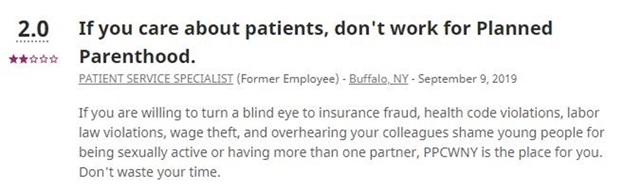
Glassdoor review: 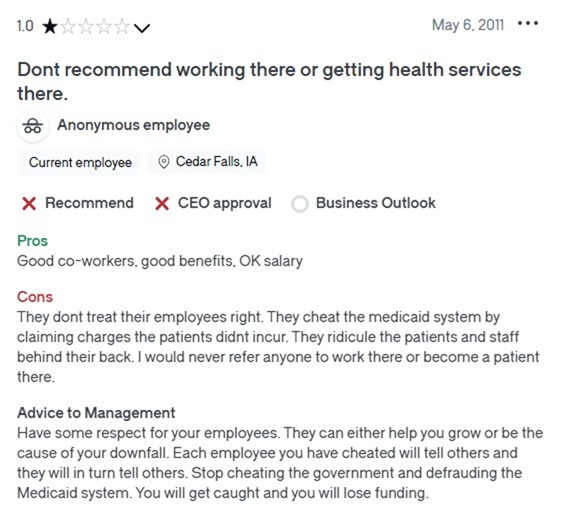
Conclusion
This is all about money, not directly about killing, and fraud is certainly less of a crime than killing is. So why does it matter to consistent-lifers?
Fraud is done from greed, and greed is one of the many connections between all the kinds of killing.
Money supports the killing, and having more money means a killing institution – any killing institution – is able to practice more killing.
The kind of money-grubbing that leads to massive fraud when done by heartless large corporations, including Planned Parenthood, shows they’re in it for the money and belies their claims of compassion.
Discussions over whether or not the government should be providing taxpayer dollars to Planned Parenthood would be better informed with knowing this, since many people who are rightly concerned that medical care for the poor be well funded are against fraud. They regard the practice of fraud as a reason to avoid giving funds to those committing it.
It’s not just the taxpayers – the people in poverty for whom Medicaid money is designated are sometimes overcharged and are always being robbed. The people who can least afford to have their healthcare interfered with are the ones most suffering the consequences of the fraud.
For consistent-lifers, this point is one of special angst: Medicaid money is going down as war costs go up. The idea that the military budget has been a stunning waste of money when so much is needed for actual human needs is a point we’ve been making for decades. It’s especially acute right now. At a time when the Medicaid budget is being cut, and it’s explicitly stated that such cuts are needed so the military can get more money, it’s an outrage that an organization like Planned Parenthood would essentially make more Medicaid cuts by taking a chunk of Medicaid’s meagre budget out in fraud for their own enrichment.
============================
For more of our posts on problems at Planned Parenthood, see:
Grievances against Planned Parenthood: Extensive Documentation
Racism and Planned Parenthood: Documentation
Racism and Planned Parenthood: Stories from Employee Lawsuits
Planned Parenthood Staff Revolt
Orange California Planned Parenthood 911 Calls
In Vitro Fertilization
by Jim Hewes
The Alabama Supreme Court affirmed that embryos are children — bringing significant attention to the future of In Vitro Fertilization (IVF) treatments in the state. The ruling followed lawsuits filed by several couples who were suing for wrongful death after an IVF clinic carelessly dropped and destroyed their frozen embryonic children. Then Alabama lawmakers passed legislation protecting the practice of IVF in the state, which the governor signed into law.
The first “test tube baby” (Louise Brown) was born in 1978, a term that carried a negative connotation at the time. Since then, more than 12 million of these babies have been conceived through in vitro fertilization. In the United States between 1 and 2 percent of all children born each year are conceived through IVF. The latest data reported in March 2026 show that over 100,000 babies resulting from IVF were born in a single year.
Embryos
In addressing the issue of IVF, it’s essential to affirm that how a child is conceived has no bearing on his or her inherent dignity and incalculable value. Human dignity is intrinsic, never earned or achieved. Children conceived through IVF are worthy and precious. Likewise, children conceived by any circumstance –prostitution, incest, rape, human trafficking, adultery, a casual relationship, etc.— are equally precious. Every child must be treated and loved the same regardless of the circumstances of conception.
A central concern is the fate of embryonic children of immeasurable value. The human embryo is a person, and so deserves love, respect, and protection.
If a couple chooses to create multiple embryos, what happens to those who are not transferred? Human beings don’t belong in a glass petri dish, nor should they be frozen indefinitely or used for research or destroyed as surplus.

This includes the embryonic children’s lives ended by “selective abortions” because they’re found defective or unwanted. These practices raise serious moral questions about how embryonic life is treated.
In reality, IVF involves the treatment of these tiny vulnerable lives as a commodity, property possessed by the parents. “Quality control” is a form of eugenics when only the “best” embryos are used. The others, the ‘leftovers,’ are eliminated by selective abortion, destroyed in the lab, or frozen indefinitely.
The Loss of Embryonic Life
Writing in Public Discourse, Stephen Austin explains that in 2019, out of a million embryos involved in IVF cycles, 84,000 made it to term. The remaining 900,000 didn’t make it to birth. The medical process has an extremely high failure rate.
In addition, there’s what happens with those estimated 400,000 to 1,500,000 embryonic children, the castoffs of a well-funded industry, where couples who choose IVF face cruel choices yearly. They’re typically asked to pay $600 or more a year to keep their embryonic children in a frozen limbo (with possible embryo degeneration) rather than have them just “discarded.”
IVF and Abortion: A Shared Logic
Katy Faust, in her book Them Before Us: Why We Need a Global Children’s Rights Movement argues:
Abortion and third-party reproduction are two sides of the same child-commodifying coin. Both abortion and reproductive technologies determine a child’s rights based on whether the child is wanted. Abortion advocates say “If children are unwanted, you can force them out of existence even if it violates their right to life.” Advocates of third-party reproduction say “If children are very wanted, you can force them into existence even if it violates their right to their mother and father.”
The focus of IVF and abortion is on the adults’ dreams, hopes, longings, suffering, fear, and desires. The child is secondary, then required to accommodate adult feelings. . . In both industries, children must be regarded as objects of rights, not objects of adult preferences.
International Legal Approaches
Some countries’ practices show us alternatives to the “wild, wild west” of current IVF practices in the United States.
Although far from perfect and not stopping every preventable injustice done to embryonic children, Germany enacted an Embryo Protection Law during the 1990s, which included provisions outlawing the freezing of human embryos. Italy has similar legislation in force. Both countries closely regulate in vitro fertilization treatments and allow the production of no more than three embryos at a time, all of which must be implanted into their mother. This is still wrong, but less of a “wild west” approach.
Both countries forbid the production of extra embryos, experimentation on embryos, embryo cloning, and genetic testing of embryos – even knowing that such laws might lower the percentage of “success.”
Such restrictions could go a long way towards stemming the tide of human exploitation, so that IVF is no longer commonplace.
Restorative Reproductive Medicine
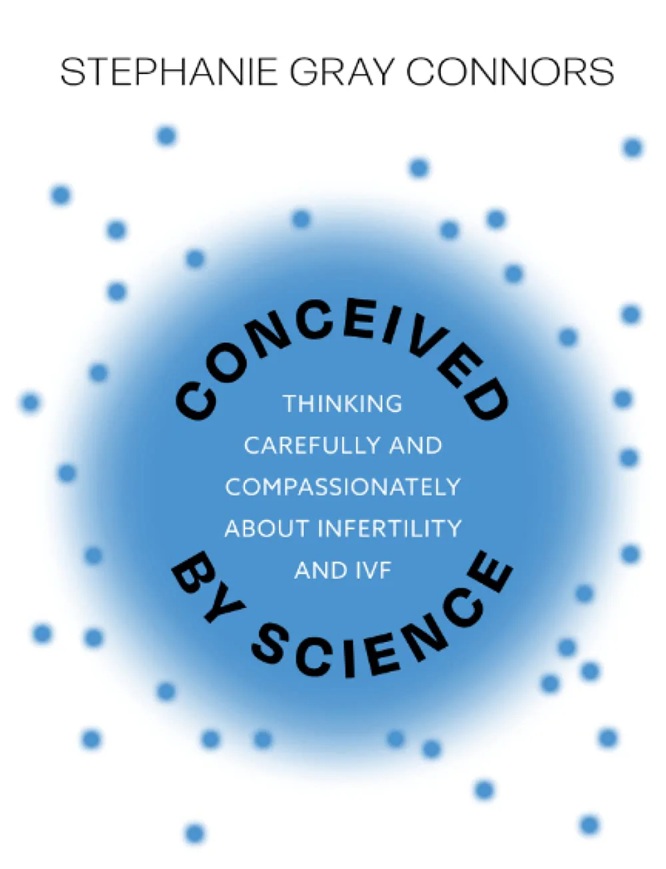 NaPro Technology and Creighton are forms of natural family planning that incorporate scientific research and advanced medical techniques for predicting ovulation and levels of fertility. See also Springs in the Desert, and Stephanie Gray Connors’ book Conceived by Science.
We can also raise awareness of the positive options of adoption, foster care, and spiritual parenthood.
============================
For other of our posts from author Jim Hewes, see
Abortion and Other Issues of Life: Connecting the Dots
Reflections from My Decades of Consistent Life Experience
Exposing Injustice Through Graphic Images
Death Penalty and other Killing: The Destructive Effect on Us